
If you work in a contact center and manage several projects simultaneously, you know that data management is a real headache. Protecting confidential customer information becomes an extremely important task. Different projects, different clients, lots of information – how to organize all this so as not to get confused and lose important data? You will find answers to these questions in this article.
What are contact fields
Contact fields are customer data stored in the CRM system. For example: first name, last name, address, phone, email and other information necessary for the agent. With their help, you can quickly find the required customer data, as well as supplement it with new records. Contact fields can be customized for specific company needs and various business projects.
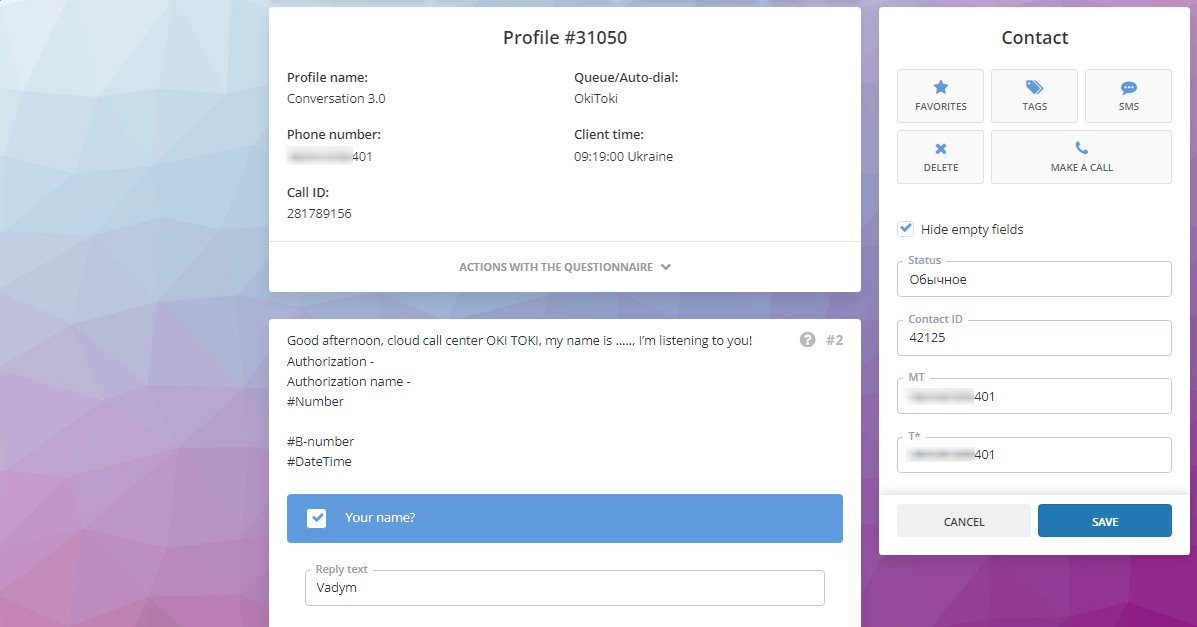
Advantages of contact fields in Oki-Toki
The main purpose of using contact fields is to organize and store customer information. In Oki-Toki, you can easily systematize it, making it accessible and convenient for agents to work with. And separation by projects will increase control over data access.
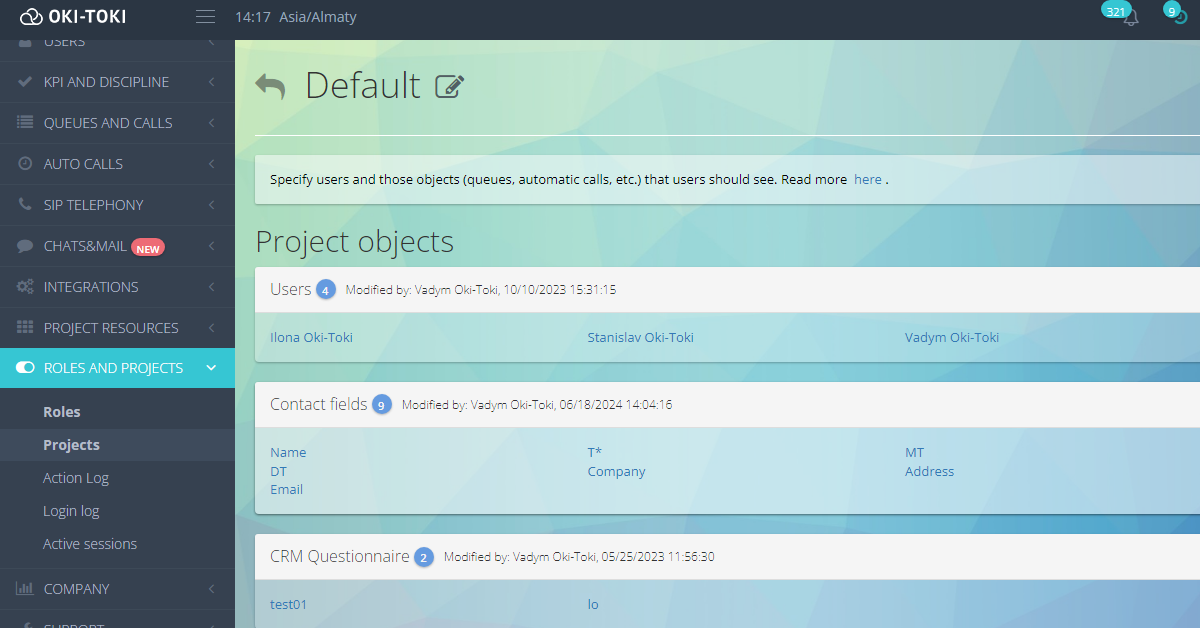
Each project has its own unique fields, which allows agents to see only the necessary information and avoid confusion. Thanks to this approach, agents see only what relates to their current project. Also, separating fields by projects increases customer data security, providing reliable protection and confidentiality.
How to create contact fields in Oki-Toki
To create exclusive fields in Oki-Toki:
- Go to the CRM menu – Contact Fields section and click “Create”.
- A window with settings will appear, where the “Name” field is mandatory, the rest – as needed.
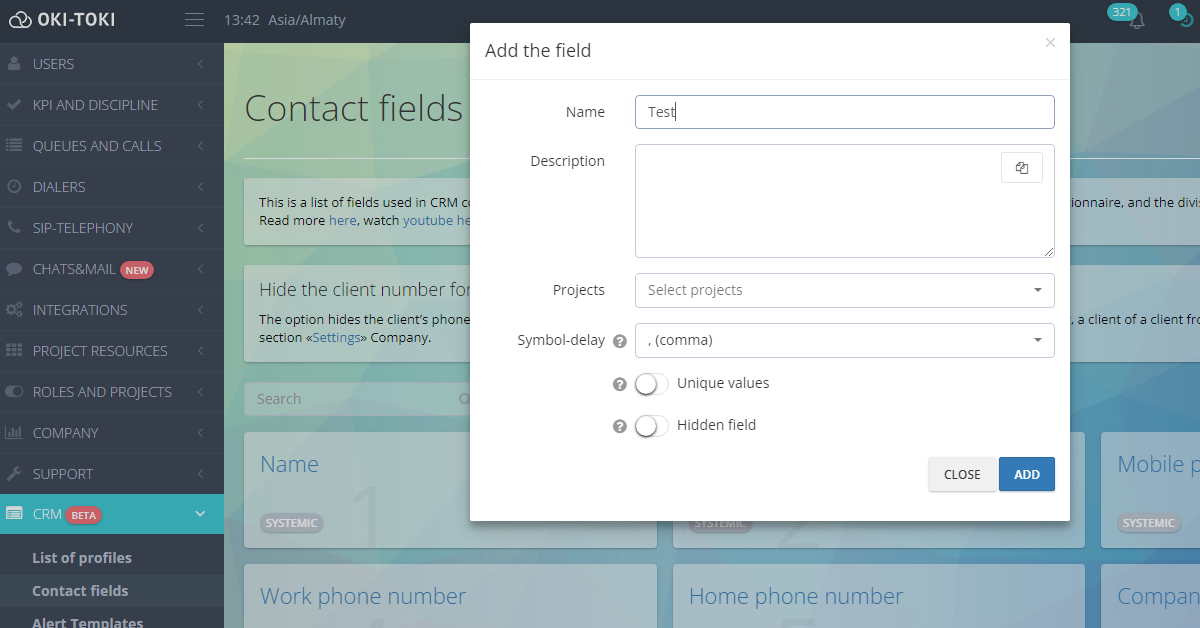
- Select the projects in which it will be used. If there are none yet, you can do this later.
How to create projects read in a separate article on the blog.
- If you activate the “Unique values” parameter, the system will control the uniqueness of contacts by the content of this field, that is, each contact will have unique data in this field.
- A hidden field is not visible in the profile during a call and is only accessible to those who have the right to “See masked fields”. This means that such information is available only to certain employees, which increases data security and confidentiality. Hidden fields help restrict access to important information, providing additional protection.
To add additional customer information from import to Oki-Toki CRM, you need to bind fields to the profile:
- Go to the profile settings in the “Data and fields” section.
- Click the “Add” button and a window will appear with field binding.
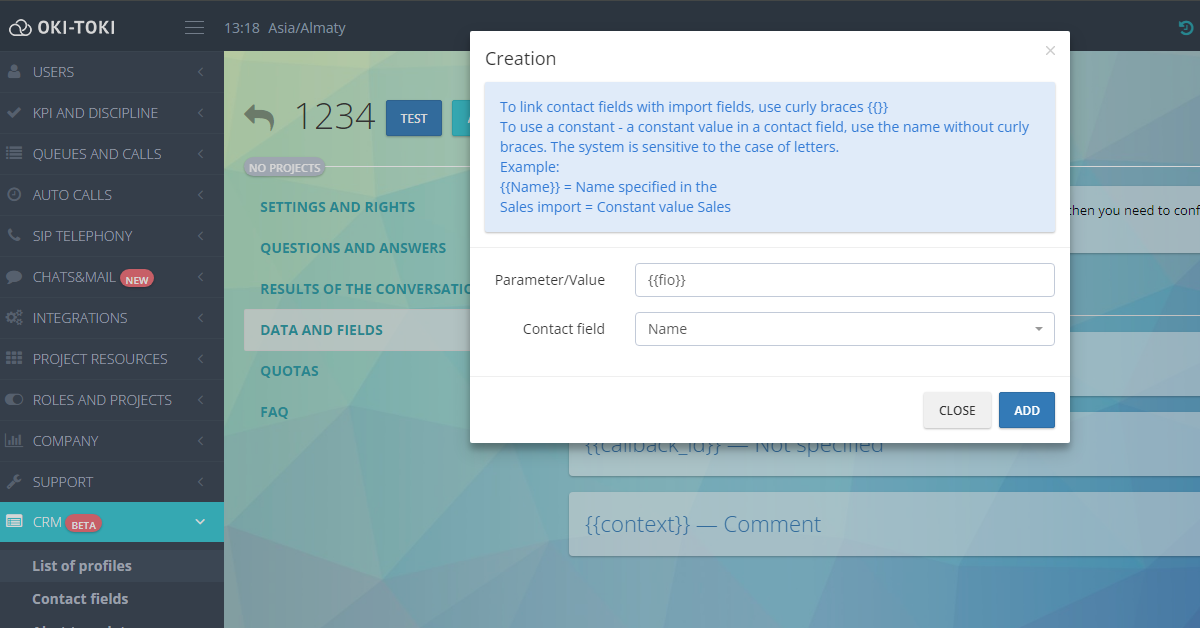
- To bind contact fields with import fields, use curly braces {{}}.
- For a constant (permanent value in the contact field), write the name without curly braces.
Important! Oki-Toki is case-sensitive.
Examples:
- {{Name}} = Name specified in the import
- Sales = Constant value “Sales”
For an agent to be able to add customer information to the profile during a conversation, follow these steps:
- Go to the profile settings, “Response editing” section.
- Select “CRM Integration” and specify the contact field.
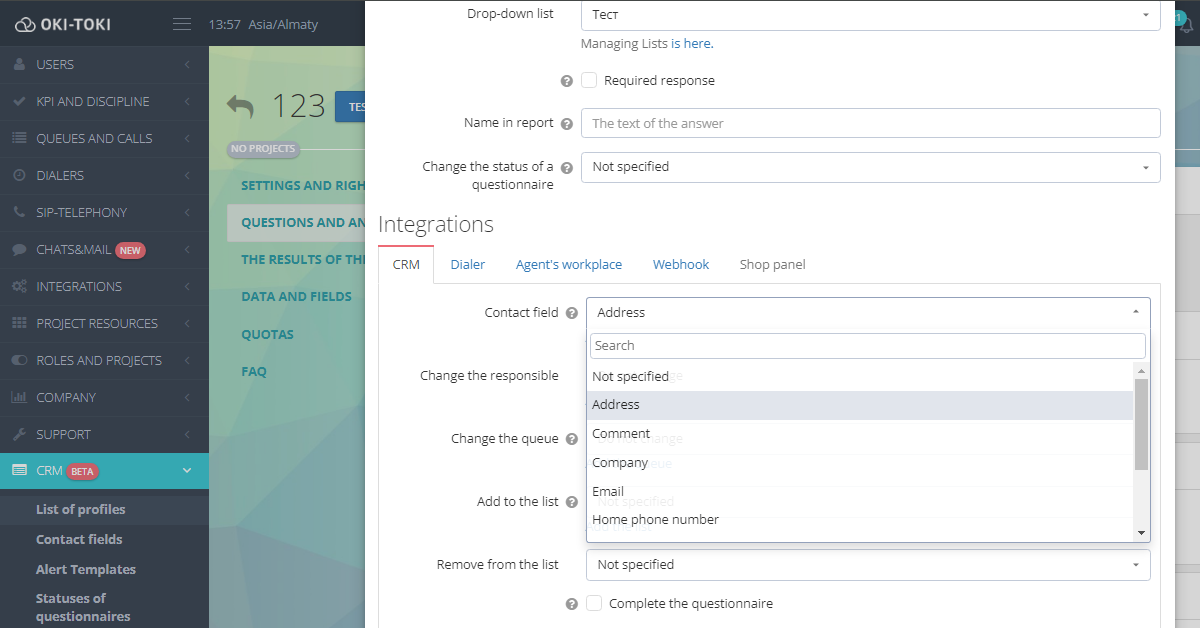
The agent’s response or response content (in case of text response type) will be linked to the specified contact field.
Customer data protection mechanisms
Fields in Oki-Toki provide reliable data protection in the call center between different projects thanks to their isolation. Each field is tied to a specific project and is accessible only to those agents who work in it. These security measures in the call center exclude the possibility of accidental or unauthorized access. Thus, information from one project never crosses with another, which minimizes the risks of leaks and security breaches.
In Oki-Toki, you can protect information and restrict rights using roles. In the settings, you just need to specify which sections the employee will have access to and which not. There is also the ability to restrict management and visibility of customer contact fields.
Role configuration allows you to organize access to information in CRM. For example, you can create your own “Sales Manager” role and an employee assigned this role will see customer data and deals, while “Technical Support” has access only to customer requests. Roles help ensure security and efficiency in CRM by restricting access to confidential information only to those users who need it.
You can find more detailed information about roles in our article.